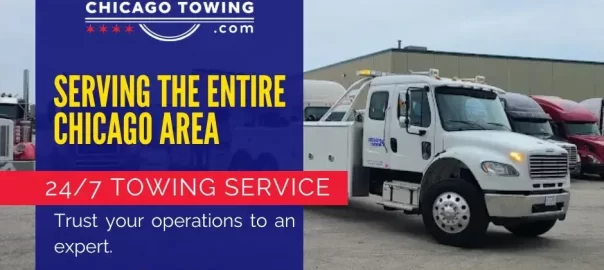
When you drive the Eisenhower at rush hour or haul freight across I-90 on a windy afternoon, you come to appreciate how vital dependable heavy duty towing is to keeping Chicago, Illinois moving. Around here, a breakdown doesn’t just slow a single operator—it can disrupt a whole corridor of commuters, deliveries, and construction schedules. As local road conditions shift between lake-effect showers and freeze–thaw cycles, the benefits of specialized recovery support become clear: faster incident clearance, fewer secondary collisions, and less downtime for the trucks that power our region’s economy. In this article, I’ll walk through the practical advantages that heavy duty operators deliver on Chicago streets and expressways, why training and equipment matter so much, and how choosing a local team can make all the difference when minutes count.
Why Heavy Duty Towing Matters for Chicago’s Busy Roads
First, consider the scale and complexity of vehicles that travel our city daily. Tractor–trailers, cement mixers headed to a South Loop job, transit buses navigating State Street, and box trucks weaving between the West Side and the North Shore all impose unique recovery demands. A light-duty wrecker might handle a commuter sedan, but safely managing a loaded rig on the Dan Ryan requires the reach and control of a heavy rotator, air cushions for delicate uprighting, and operators who know the grid like the back of their hand. Those tools aren’t just impressive—used properly, they reduce the footprint of a crash scene, shorten lane closures, and limit damage to both the vehicle and the roadway.
Equipment and Expertise Behind Reliable Recovery
Another benefit is coordination. Heavy duty towing teams accustomed to Chicago’s rhythm understand how to communicate with Illinois State Police, IDOT Minutemen, and city agencies so that scenes are secured quickly and reopened with minimal disruption. When a disabled charter bus stalls near Grant Park during an event weekend, experience dictates how to stage equipment, where to create safe buffer space, and how to clear the coach without scraping historic curbs or blocking crosswalks longer than necessary. That coordination protects pedestrians as much as it helps professional drivers.
Local Coordination for Faster, Safer Clearances
Equipment depth is equally important. Chicago winters are demanding, and summer roadwork season is a world of its own. Fleets that invest in multi-axle heavy wreckers, lowboys for specialty transport, and load-shifting tools can adapt to anything from a reefer trailer whose cargo has shifted on Lake Shore Drive to an articulated dump truck that needs a gentle pull from a muddy jobsite in Pullman. When operators have the right gear on hand, they can avoid jury-rigged solutions that risk further damage.
Speed matters, but so does precision. The best heavy duty professionals practice controlled movements—anchoring carefully, choosing recovery points that preserve structural integrity, and using rigging that disperses force. That attention to detail is what saves a chassis from twisting during a winch-out on an icy shoulder near O’Hare. Precision also shows up in route choice; seasoned local operators know where low bridges hide, which ramps ice over first, and how lake-effect wind plays along the Skyway.
There’s also the benefit of continuity. One recovered vehicle often needs transport to a shop yard, a dealer, or a distribution hub on the South Side. Providers who can handle the entire chain—recovery, tow, and placement—reduce handoffs, limit risk, and keep schedules intact. When your business depends on turning loads, not waiting for the next slot, that continuity is a competitive advantage.
Mid-incident safety deserves its own spotlight. Chicago’s traffic density means secondary crashes are a constant concern. Heavy duty operators trained in scene lighting, traffic control, and quick clearance reduce that risk substantially. They position trucks to shield the work area, deploy cones and flares effectively, and communicate with troopers so traffic can be metered past the scene. The payoff isn’t just faster reopening—it’s fewer injuries and less property damage.
Environmental and Community Benefits
In the middle of any conversation about benefits, it’s worth emphasizing how local knowledge amplifies the value of expert heavy duty towing. From knowing the best staging zones near McCormick Place to understanding weight restrictions on particular surface streets, real-world familiarity saves time and headaches. With the right partner, a complex recovery becomes a predictable process rather than a gamble.
Environmental stewardship also plays a role. Proper fluid containment, debris removal, and sensitive handling of damaged cargo reflect not only regulatory compliance but respect for Chicago’s neighborhoods and waterways. Experienced providers carry the absorbents, pads, and collection tools to prevent small problems from becoming big cleanups.
Finally, consider peace of mind. Downtime is expensive in any industry, but uncertainty is worse. Partnering with a capable heavy duty team gives fleet managers confidence that—even on a snowy pre-dawn at the Jane Byrne Interchange—help will arrive with the right equipment and a plan tailored to the scene.
FAQs
What makes heavy duty towing different from standard towing in Chicago?
The vehicles are larger, the forces are higher, and the situations more complex. Specialized wreckers, rotators, and rigging—combined with local experience—allow safe, efficient recovery on busy city corridors.
How does local expertise improve response times?
Familiarity with traffic patterns, staging locations, and agency protocols trims minutes at every step, from arrival to clearance, which is critical on congested routes like the Dan Ryan.
Can heavy duty teams handle cargo issues as well as vehicle recovery?
Yes. Many carry load-shifting equipment and can coordinate securements or transfers so the vehicle can move safely to its next destination.
Is winter recovery handled differently?
Operators plan for traction challenges, black ice, and limited visibility, adjusting rigging angles and scene protection to account for seasonal hazards common near the lakefront and airport corridors.
When you want a partner who understands Chicago’s roads, weather, and pace, choose professionals who combine skill, equipment depth, and true local knowledge. If you need reliable heavy duty towing support, reach out today and we’ll be ready to help you clear the way and keep your operation moving.
